

305 MW across six projects
Recent MASEN solar programme
Morocco kicked off construction on a six-project solar programme with PPAs signed between MASEN and ONEE, illustrating the programmatic procurement model for bundled projects.
20 to 25 years
Typical PPA duration
Indicative standard term for MASEN solar PPAs, providing long-term revenue visibility for project finance structures.
MAD 2M to 6M (approx. EUR 185K to 560K)
Pre-development cost range (sub-50 MW)
Indicative estimate covering feasibility studies, permitting, advisory, and bid preparation costs, largely at risk until PPA award.
18 to 36 months
Site-to-PPA timeline
Typical duration from initial site identification to executed PPA, depending on tender alignment and permitting complexity.
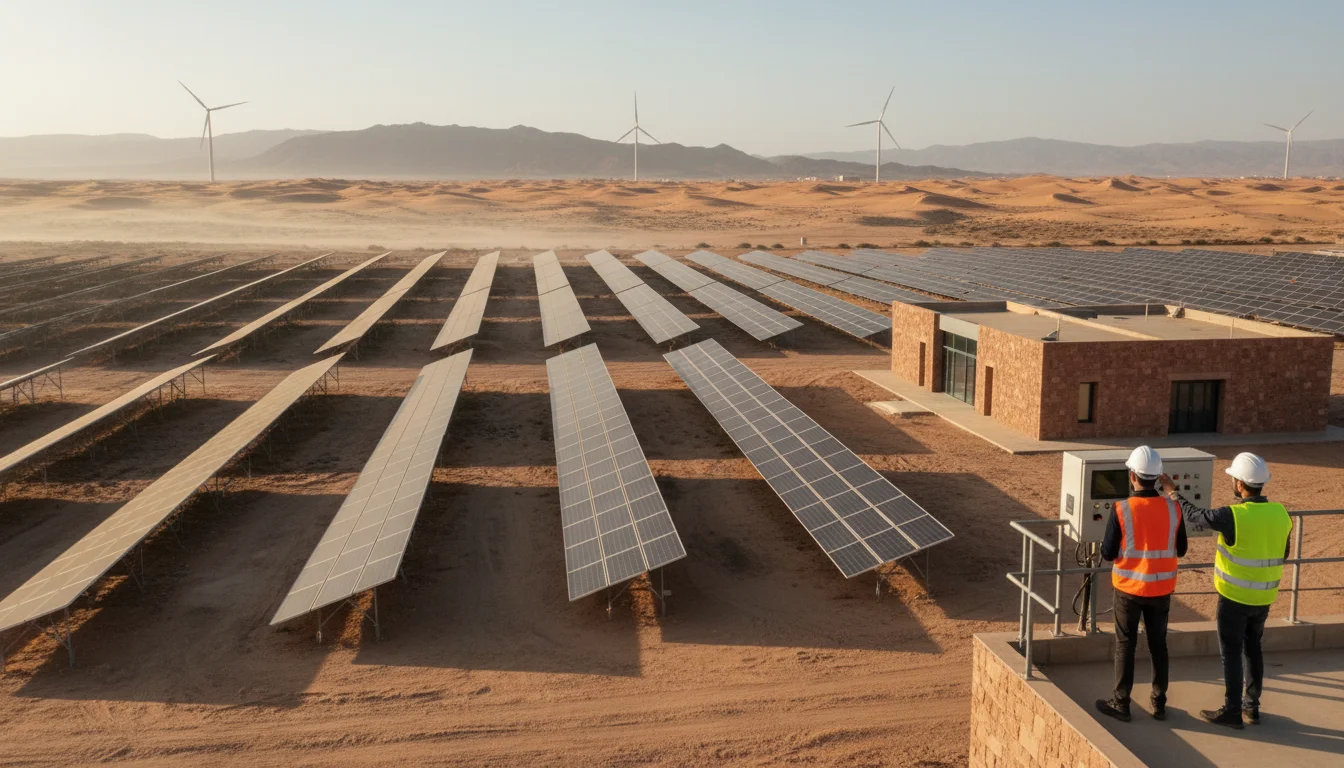
A procedural guide for investors seeking MASEN power purchase agreements for sub-50 MW solar projects in Morocco's eastern regions, covering steps, costs, documentation, and compliance risks.
What Is a MASEN PPA and Who Needs This Guide
Morocco's Moroccan Agency for Sustainable Energy (MASEN) serves as the central counterparty for renewable energy power purchase agreements (PPAs) in the country. Under Morocco's evolving energy framework, Law N° 2-94-503 originally allowed the national utility ONE (now ONEE) to contract with independent power producers (IPPs), and MASEN has since assumed the role of structuring, tendering, and managing PPAs for solar and other renewable projects. For sub-50 MW solar installations, particularly in Morocco's eastern regions where high ambient temperatures and strong horizontal solar irradiance make these areas prime candidates for upcoming solar capacity, securing a MASEN PPA is the critical commercial milestone that underpins project bankability.
This guide is written for international and local investors, project developers, and their advisors who are evaluating or actively pursuing sub-50 MW solar opportunities in Morocco's Oriental, Draa-Tafilalet, or adjacent eastern regions. It walks through the procedural steps, indicative costs, required documentation, and compliance risks involved in moving from initial project concept to a signed PPA with MASEN.
- MASEN is the central counterparty for solar PPAs in Morocco; sub-50 MW projects typically access PPAs through competitive tenders or programmatic procurement rounds.
- Pre-development costs for a sub-50 MW solar project in eastern Morocco indicatively range from MAD 2 million to MAD 6 million (approximately EUR 185,000 to EUR 560,000), largely at risk until PPA award.
- The full cycle from site identification to PPA execution typically spans 18 to 36 months, with land tenure and grid connection studies as the most common sources of delay.
- Morocco's eastern regions offer among the highest solar irradiance levels in the country, but developers must verify local grid capacity with ONEE before committing to a site.
- Competitive tariff pressure in MASEN tenders demands rigorous financial modeling; overly aggressive bids that win but prove unfinanceable are a recognized sector risk.
Step-by-Step Procedure: From Project Concept to Signed PPA
The path to a MASEN PPA for a sub-50 MW solar project involves a sequence of regulatory, technical, and commercial steps. While MASEN periodically adjusts its procurement modalities, the following procedure reflects the general framework applicable to projects in this size range.
Step 1: Preliminary Feasibility and Site Identification
Identify a viable site in the target eastern region. This involves securing land rights (whether through lease, concession from communal authorities, or acquisition of private land), conducting a preliminary solar resource assessment, and confirming grid proximity. Morocco's eastern desert zones benefit from some of the highest direct normal irradiance (DNI) levels in the country, but developers must verify that the local ONEE grid infrastructure can accommodate the planned injection capacity. Engage a qualified environmental consultant early to scope the Environmental and Social Impact Assessment (ESIA) requirements under Moroccan law.
Step 2: Expression of Interest or Response to MASEN Tender
MASEN typically procures renewable capacity through competitive tenders. For sub-50 MW projects, these may be bundled into programmatic calls for proposals. Recent precedent includes a six-project, 305 MW solar programme where PPAs were signed between MASEN and ONEE, illustrating how multiple smaller projects can be grouped under a single procurement round. Monitor MASEN's official procurement portal and pre-register as a qualified bidder. If MASEN has not issued a relevant tender, developers may submit an unsolicited expression of interest, though the path to a PPA through this route is less standardized and typically slower.
Step 3: Pre-Qualification
Submit a pre-qualification dossier demonstrating technical capacity (prior solar project experience, engineering capabilities), financial standing (audited financial statements, evidence of equity commitment or sponsor backing), and legal eligibility (incorporation in Morocco or commitment to establish a local special purpose vehicle, or SPV). MASEN evaluates pre-qualification submissions against published criteria, and only shortlisted developers proceed to the Request for Proposals (RFP) stage.
Step 4: Detailed Proposal Submission
Prepare and submit a full technical and financial proposal in response to the RFP. The technical proposal covers plant design, technology selection (PV module type, inverter specifications, tracker vs. fixed-tilt), construction schedule, and operations and maintenance (O&M) plan. The financial proposal centers on the proposed tariff (typically expressed in MAD/kWh), the financing plan, and the project's financial model. MASEN evaluates bids primarily on tariff competitiveness, but technical robustness and developer track record carry significant weight.
Step 5: Negotiation and Award
Following bid evaluation, MASEN enters into exclusive negotiations with the preferred bidder. Key negotiation points include PPA duration (typically 20 to 25 years), tariff escalation mechanisms, curtailment risk allocation, force majeure provisions, and performance guarantees. The developer must also finalize the grid connection agreement with ONEE, which governs the technical and commercial terms of power injection.
Step 6: Regulatory Approvals and Permitting
Before financial close, the developer must obtain all required permits: the ESIA approval from the relevant regional authority, construction permits from the local commune, and any sector-specific authorizations from the energy regulator (ANRE). For projects above certain capacity thresholds, additional approvals from the Ministry of Energy Transition may be required.
Step 7: Financial Close and PPA Execution
Finalize project financing (debt and equity), satisfy all conditions precedent in the PPA (including insurance, performance bonds, and equity contribution evidence), and execute the PPA with MASEN. At this stage, the project transitions from development to construction.
Indicative Costs and Budget Considerations
Developing a sub-50 MW solar project through to PPA execution in Morocco involves a layered set of costs spanning pre-development, permitting, advisory, and financial structuring. The figures below are indicative ranges based on regional market norms for projects of this scale. Actual costs will vary depending on site specifics, technology choice, and the competitive dynamics of the relevant MASEN tender round.
| Cost Category | Indicative Range (MAD) | Approx. EUR Equivalent | Notes |
|---|---|---|---|
| Solar resource assessment (bankable study) | 300,000 to 800,000 | 28,000 to 75,000 | 12 to 18 months of on-site measurement typically required for bankability |
| Environmental and Social Impact Assessment | 500,000 to 1,500,000 | 47,000 to 140,000 | Scope depends on site sensitivity and regional authority requirements |
| Legal and regulatory advisory | 400,000 to 1,200,000 | 37,000 to 112,000 | Covers SPV formation, land agreements, permitting, and PPA negotiation support |
| Financial advisory and modeling | 300,000 to 1,000,000 | 28,000 to 93,000 | Includes financial model, lender coordination, and due diligence support |
| Pre-qualification and bid preparation | 200,000 to 600,000 | 19,000 to 56,000 | Technical design, proposal drafting, and submission logistics |
| Grid connection study (ONEE) | 200,000 to 500,000 | 19,000 to 47,000 | ONEE charges for grid impact and connection feasibility studies |
| Performance bond / bid bond | Variable | Variable | Typically 1% to 5% of project capex, required at bid or financial close |
Total pre-development expenditure for a sub-50 MW solar project in Morocco's eastern regions can therefore range from approximately MAD 2 million to MAD 6 million (roughly EUR 185,000 to EUR 560,000) before any construction capital is deployed. These costs are largely at risk until PPA award, making careful staging of expenditure and early engagement with MASEN's procurement timeline essential for capital efficiency.
In terms of timeline, the full cycle from initial site identification to PPA execution typically spans 18 to 36 months, depending on whether the project aligns with an active MASEN tender or requires an unsolicited proposal pathway. Pre-qualification alone can take three to six months, and PPA negotiation following bid award may require an additional three to nine months. Developers should budget for at least 24 months of carrying costs on pre-development expenditure.
Required Documentation Checklist
The following documents are typically required at various stages of the MASEN PPA process. Developers should begin assembling these early, as delays in documentation are among the most common causes of missed tender deadlines.
- Corporate documents: Certificate of incorporation (Morocco SPV or parent entity), articles of association, shareholder register, and board resolutions authorizing the project and bid submission.
- Financial statements: Audited accounts for the sponsor entity (typically the last three fiscal years), evidence of equity commitment or sponsor support letter, and bank references.
- Technical credentials: Track record of completed solar projects (capacity, location, technology), CVs of key technical personnel, and references from prior off-takers or EPC contractors.
- Land documentation: Proof of land rights (title deed, lease agreement, or communal concession), cadastral survey, and any relevant zoning or land-use approvals.
- Environmental documentation: Completed ESIA report, public consultation records, and approval from the regional environmental authority.
- Grid connection: ONEE grid connection feasibility study results and preliminary connection agreement or letter of intent.
- Technical proposal: Preliminary plant design, technology specifications, energy yield estimate (based on bankable solar resource data), construction schedule, and O&M plan.
- Financial proposal: Detailed financial model, proposed tariff, financing plan (debt/equity split, identified lenders), and sensitivity analyses.
- Insurance: Evidence of ability to procure construction all-risk (CAR) and operational insurance policies meeting MASEN and lender requirements.
- Compliance certificates: Tax clearance, social security compliance, and any anti-corruption or sanctions compliance declarations required by MASEN or international lenders.
Common Pitfalls and Compliance Risks
Several recurring issues can derail or significantly delay a sub-50 MW solar PPA process in Morocco. Awareness of these pitfalls is essential for developers and their investors.
Land tenure complexity. Morocco's land regime includes private, collective (communal), and state-owned categories, each with distinct legal procedures for securing development rights. Collective lands in eastern regions often require approval from the Ministry of Interior and local community representatives, a process that can add six to twelve months if not initiated early. Failure to secure clean, bankable land rights is one of the most frequent causes of project failure at the pre-qualification or financial close stage.
Grid capacity constraints. While eastern Morocco offers excellent solar resources, the transmission and distribution infrastructure in some areas remains limited. Developers who assume grid availability without conducting a formal ONEE connection study risk discovering capacity constraints late in the process, potentially requiring costly grid reinforcement investments that alter project economics.
Tariff competitiveness pressure. MASEN's competitive tender process has driven solar PPA tariffs in Morocco to levels that are among the lowest in the MENA region. Developers must ensure their financial models reflect realistic construction costs, financing terms, and degradation assumptions. Overly aggressive tariff bids that win the tender but prove unfinanceable are a known risk in the sector.
Regulatory evolution. Morocco's renewable energy regulatory framework continues to evolve, including the roles of ANRE (the national electricity regulatory authority) and the interplay between MASEN and ONEE. Developers should monitor regulatory developments closely and ensure their PPA structures account for potential changes in grid access rules, wheeling charges, or curtailment compensation mechanisms.
Local content and social obligations. MASEN tenders increasingly include local content requirements and community benefit obligations. Non-compliance with these provisions can result in penalties or PPA termination. Developers should integrate local procurement strategies and community engagement plans from the outset.
Where Professional Support Changes the Outcome
The MASEN PPA process is technically and commercially demanding, and the margin between a successful bid and a failed one often comes down to the quality of advisory support. Several areas are particularly high-leverage for external expertise.
Financial structuring and tariff optimization. Crafting a competitive yet financeable tariff bid requires deep familiarity with Moroccan project finance markets, lender appetite for sub-50 MW solar risk, and the specific financial modeling conventions that MASEN and its advisors expect. Smart.by's Financial Advisory and Structuring team works with developers to build robust financial models, stress-test tariff scenarios, and coordinate with local and international lenders to ensure bankability before bid submission.
Regulatory navigation and market intelligence. Understanding the current state of MASEN's procurement pipeline, upcoming tender windows, and the evolving regulatory landscape is critical for timing market entry correctly. Smart.by's Market Research and Intelligence service provides investors with up-to-date analysis of Morocco's renewable energy sector, including competitive dynamics, policy shifts, and grid development plans that directly affect project viability in the eastern regions.
Risk management and compliance. From land due diligence to environmental permitting to local content compliance, the risk surface of a Moroccan solar project is broad. Engaging experienced local advisors who understand both the letter and the practice of Moroccan regulatory requirements can prevent costly delays and protect investor capital. Smart.by's team supports developers across the full compliance lifecycle, from initial site due diligence through to PPA execution and post-award monitoring.
For international investors unfamiliar with Morocco's institutional landscape, professional support is not a discretionary cost but a risk mitigation investment that materially improves the probability of reaching financial close on schedule and on budget.
Conclusion: Positioning for Morocco's Next Solar Procurement Wave
Morocco's eastern regions represent one of the most attractive solar development frontiers in North Africa, combining exceptional irradiance with a government commitment to expanding renewable capacity through structured MASEN procurement. For sub-50 MW projects, the PPA process is rigorous but navigable for well-prepared developers who invest in early-stage feasibility, assemble complete documentation, and submit financially disciplined bids.
The key to success lies in treating the PPA process not as a single transaction but as a multi-phase development effort that requires coordinated legal, technical, financial, and regulatory workstreams. Developers who begin land and grid due diligence before a tender is announced, who build relationships with ONEE and regional authorities in advance, and who engage experienced local advisors from the outset will consistently outperform those who react to tender announcements.
Smart.by supports investors and developers at every stage of this process, from initial market assessment through to PPA negotiation and financial close. To discuss your solar project opportunity in Morocco's eastern regions, contact our team for a confidential initial consultation.

La información proporcionada por Smart.by en el sitio www.smartbyllc.com tiene fines exclusivamente informativos y no constituye asesoramiento financiero. Contáctenos para obtener más información.
Análisis, noticias y recursos financieros
Más de 300 suscriptores confían en nosotros.


Simplificando decisiones financieras complejas a través de preguntas frecuentes.
Asesoramiento de inversión integral: asignación de capital, evaluación de riesgos, fusiones y adquisiciones, y optimización de activos, además de apoyo dedicado para inversionistas extranjeros que ingresan a Marruecos, incluyendo estudios de mercado, orientación normativa y puesta en marcha operativa. Cada proyecto se respalda con Smart Flow, nuestra plataforma de análisis de inversión en tiempo real.
Inversionistas de alto patrimonio, firmas de capital privado y de riesgo, y corporaciones que se expanden hacia Marruecos y África. Lo que todos ellos comparten es una preferencia por los datos frente a las conjeturas, y por los resultados frente a las promesas tranquilizadoras.
Reserve una consulta a través de nuestro sitio web, o llámenos o escríbanos directamente. En esa primera conversación, alinearemos sus objetivos con un plan de acción, sin necesidad de un proceso de incorporación prolongado.
Su inversión, visible en tiempo real. Smart Flow hace seguimiento del avance de los proyectos, detecta los riesgos antes de que se conviertan en un problema, y reúne el reporte financiero y la colaboración del equipo en un solo lugar, para que nunca tenga que esperar un informe trimestral para saber cómo van las cosas.
Turismo, manufactura industrial, agroindustria, transporte y logística, automotriz, e inmobiliario: sectores en los que llevamos el tiempo suficiente para detectar los riesgos y las oportunidades que otros pasan por alto.
Un capital invertido de manera deliberada, riesgos gestionados en lugar de descubiertos, y una entrada al mercado que no se estanca en trámites administrativos. Nuestros clientes miden el éxito en rendimientos, no en actividad.
Cifrados, con acceso controlado y auditados de forma independiente y periódica. Sus datos de inversión reciben el mismo rigor que su estrategia de inversión.
Siempre. Gestionamos el activo, no solo la operación: monitoreo continuo del desempeño, gestión de riesgos y ajustes estratégicos a medida que el mercado evoluciona.
Suscríbase a nuestro boletín informativo para recibir análisis de mercado y nuevas oportunidades apenas surjan, o síganos en redes sociales para actualizaciones en tiempo real.
Está integrada, no añadida después. Consideramos los factores ambientales, sociales y de gobernanza junto con los financieros, porque el valor a largo plazo y la inversión responsable no compiten entre sí.
Llame al +212 6 41 52 96 83, o visítenos en Tánger, Casablanca o Marrakech. También puede comunicarse con nuestro equipo en cualquier momento a través de la página de contacto.

¿Aún tiene dudas antes de decidirse?
- Hable con un consultor, no con un centro de llamadas
- Revise sus cifras en Smart Flow antes de decidir